
Top 5 Dangerous Indoor Air Pollutants and How to Reduce Them ?
Indoor air pollutants silently impact health, causing respiratory issues, allergies, and long-term diseases. Understanding the top indoor air pollutants and taking steps to reduce them is crucial for a healthier home or workplace.
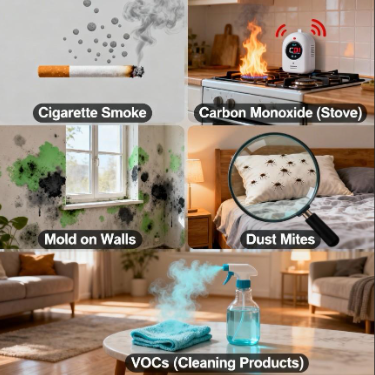
AI-generated illustration of indoor air pollutants.
1. Particulate Matter (PM2.5 & PM10)
Fine particles from cooking, smoking, candles, and outdoor pollution penetrate lungs and bloodstream.
- Use HEPA air purifiers to trap particles.
- Ventilate kitchens with exhaust fans or open windows.
- Avoid indoor smoking and limit candles/incense.
- Regularly clean surfaces and vacuum with HEPA filters.
2. Volatile Organic Compounds (VOCs) ️
VOCs come from paints, adhesives, cleaning products, and furniture, causing headaches, irritation, and long-term health risks.
- Choose low-VOC or VOC-free products.
- Increase ventilation during and after use.
- Store chemicals in ventilated areas.
- Use activated carbon filters in air purifiers.
3. Carbon Monoxide (CO)
Odorless, deadly gas from fuel-burning appliances; high exposure can be fatal.
- Install CO detectors near bedrooms and appliances.
- Service heating systems and stoves regularly.
- Never use generators indoors.
- Ensure proper ventilation in fuel-using areas.
4. Radon
Radioactive gas seeping from soil cracks; second leading cause of lung cancer.
- Test homes for radon levels.
- Seal cracks in floors and walls.
- Ventilate basements and ground floors.
- Install radon mitigation systems if levels are high.
5. Biological Contaminants
Mold, dust mites, pet dander, bacteria, and viruses worsen allergies and asthma.
- Maintain humidity at 30–50%.
- Fix leaks and clean mold-prone areas.
- Wash bedding and curtains in hot water.
- Use HEPA air purifiers to reduce allergens.
Summary
Combining proper ventilation, air purification, reduced chemical use, and regular cleaning helps minimize indoor pollutants. Awareness and proactive measures protect respiratory health and improve overall indoor air quality.
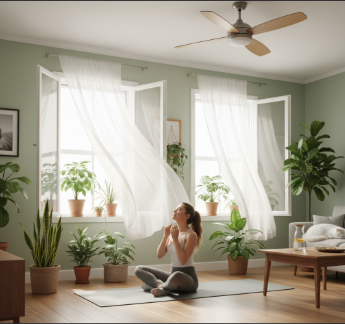
AI-generated summary of indoor air pollution mitigation.
Conclusion
Indoor air quality directly impacts health and comfort. Reducing particulate matter, VOCs, carbon monoxide, radon, and biological contaminants with ventilation, air purifiers, and safe practices creates safer indoor environments. Prioritize these steps to breathe cleaner air and enhance well-being.