
Implementing Air Quality Monitoring and Remediation in a Multispecialty Government Hospital, Tiruvallur
Introduction
A leading multispecialty government hospital in Tiruvallur, serving over 10,000 daily patients, conducted a five-month indoor air quality assessment under the Innovation in Sustainable Urban Transition Programme with support from healthcare authorities and Social Alpha. The study evaluated 24 critical hospital zones, identifying contamination hotspots and enabling targeted air quality remediation in sensitive clinical areas.
Critical Concerns
A structured baseline framework was implemented to assess and improve indoor air quality across 24 critical hospital zones, with priority given to high-traffic and infection-prone areas such as critical care, recovery units, and administrative spaces. Neonatal and pediatric ICUs, including Level 2 and Level 3 facilities, along with operation theaters, dialysis units, and clinical laboratories, were closely monitored due to vulnerable patient populations, high occupancy, and elevated contamination risks—enabling targeted medical-grade air purification interventions.
Implementation Approach
Comprehensive monitoring was conducted using Nippo Airvue’s high-precision indoor air quality monitors, measuring eight critical parameters including PM1, PM2.5, PM10, CO, CO₂, formaldehyde, temperature, and humidity. Particulate analysis revealed dust, allergen, and aerosol contamination patterns, while gas monitoring assessed ventilation performance and external pollution ingress.
Seven days of baseline data established pre-intervention conditions, followed by 20 weeks of post-installation monitoring to evaluate long-term effectiveness and seasonal variation. Microbiological swab testing across 24 locations further validated contamination reduction after deployment of Nippo Airvue’s medical-grade air purifiers.
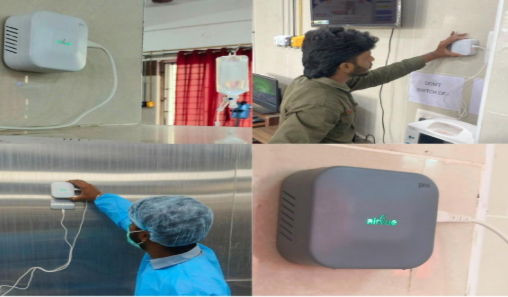
Fig 1: Live images taken during the installation of Nippo Airvue’s air quality monitors at the study site.
Pre-Installation ️
Pre-installation assessments revealed widespread air quality risks across the hospital. Over 70% of zones exceeded WHO PM2.5 limits, including labor wards, isolation areas, and diagnostic laboratories, while ICUs recorded levels of 40–50 µg/m³ despite mechanical ventilation
PM10 dust contamination affected more than 70% of zones due to external infiltration and cleaning gaps
Formaldehyde concentrations in high-risk areas such as TB wards and dialysis units were 2.8–3.8× above safe limits, and nearly one-third of enclosed spaces showed elevated CO₂ levels, indicating poor ventilation. Microbiological testing confirmed excessive bacterial and fungal loads, surpassing clinical cleanliness standards.
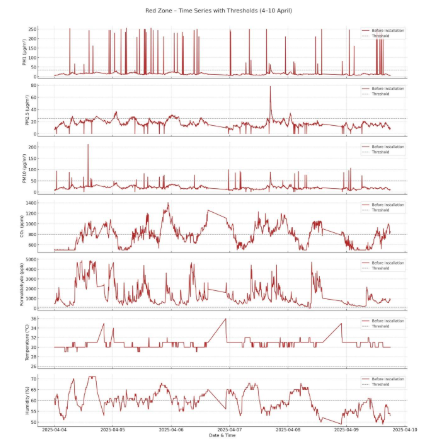
Fig 2: A graph illustrating the air quality parameter measurements recorded prior to the installation of Nippo Airvue purifiers.
Post Installation of Nippo Airvue’s Air Purifiers
Particulate levels dropped by over 60% on average, reaching below international safety standards and significantly reducing risks for vulnerable patients and staff.
Coarse particulates (PM10) decreased by more than 50%, resulting in fewer allergic reactions, improved equipment cleanliness, and reduced surgical site contamination.
Carbon dioxide stabilization improved ventilation in about one-third of zones with previous high levels, supporting increased alertness and patient comfort.
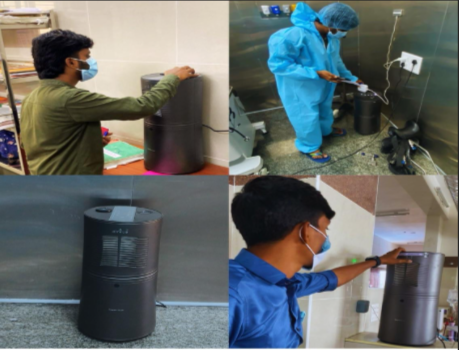
Fig 3: Live images taken during the installation of Nippo Airvue’s air purifiers at the study site.
Microbiological Assessment
Pre-installation, 85% of zones showed bacterial contamination loads ranging from 200 to 950 CFU, indicating active microbial circulation in clinical and laboratory areas.
Fungal contamination was elevated in 70% of humid wards and laboratory zones, exceeding WHO recommended cleanliness thresholds.
Post-installation, bacterial loads decreased by approximately 80%, with most sampled areas falling below clinical cleanliness standards.
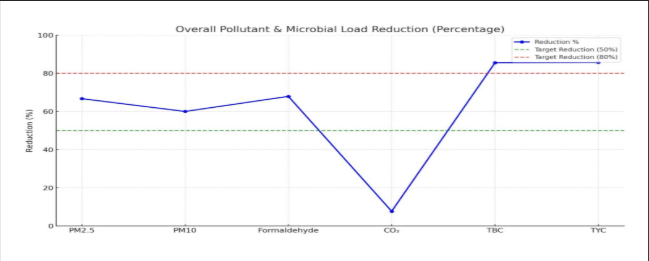
Fig 4: A graph illustrating the reduction in overall air quality and microbial contamination recorded after the deployment of Nippo Airvue purifiers.
Nippo Airvue’s Solution
Nippo AirVue’s remediation program deployed medical-grade HEPA and activated carbon filtration based on zone-specific contamination and vulnerability. Installation optimized air circulation while minimizing clinical disruption.
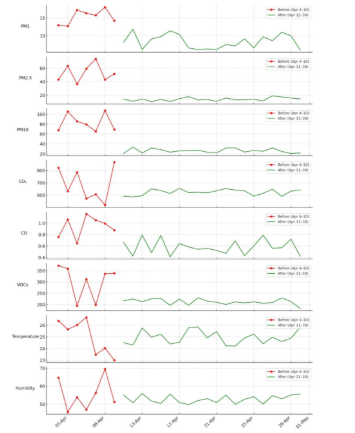
Fig 5: A graph illustrating the 8 air quality parameters recorded before and after the deployment of Nippo Airvue purifiers.
Post-intervention, zone compliance rose from 60% to 90%, demonstrating effective environmental health management. Critically, these improvements contributed to significant reductions in hospital-acquired infections (HAIs). Enhanced air quality reduced airborne pathogen loads, lowering infection transmission risks, especially in intensive care and surgical areas vulnerable to HAIs.
Conclusion
This project proves that real-time air quality monitoring and medical-grade purification can significantly reduce pollution and infection risks in healthcare settings, setting a scalable benchmark for safer public hospitals.