
Smart Building Solutions: How to Pick the Right Indoor Air Quality Monitor
As smart buildings become increasingly common, ensuring healthy indoor air quality (IAQ) is fundamental to occupant well-being, operational efficiency, and regulatory compliance. An effective IAQ monitoring system provides real-time data on pollutants and environmental factors, enabling dynamic control of ventilation, filtration, and HVAC systems. Choosing the right system demands a clear understanding of building needs, sensor technology, integration capabilities, and ongoing maintenance considerations. This blog presents a practical guide to selecting the best indoor air quality monitoring system tailored to smart buildings.
Why Indoor Air Quality Monitoring Matters
Smart buildings rely on interconnected systems to optimize resources and enhance occupant comfort. Poor air quality can impair cognitive function, cause discomfort, and increase health risks. Monitoring key IAQ parameters not only promotes healthier indoor environments but also supports energy efficiency by adjusting HVAC operation based on occupancy and pollutant levels. Furthermore, IAQ data is essential for certifications like LEED or WELL, which require ongoing air quality documentation.
Essential Air Quality Parameters to Monitor
Source - AI generated
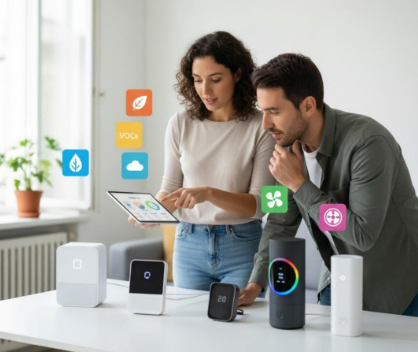
A comprehensive IAQ monitoring system should measure several critical factors:
- Carbon Dioxide (CO2): Elevated CO2 indicates insufficient ventilation and correlates to decreased cognitive performance.
- Particulate Matter (PM2.5 and PM10): Fine particles from dust, smoke, or combustion sources can enter lungs causing respiratory issues.
- Volatile Organic Compounds (VOCs): Emitted from paints, chemicals, and furnishings, VOCs contribute to indoor pollution and odor.
- Humidity and Temperature: Key for occupant comfort, mold prevention, and control of airborne pathogens.
- Additional Gases: Such as carbon monoxide, ozone, and formaldehyde in specialized settings.
Criteria for Choosing an IAQ Monitoring System
1. Sensor Accuracy and Reliability
High sensor accuracy is crucial to avoid false alarms or overlooked hazards. Look for systems employing industry-standard sensors with regular calibration schedules. Auto-calibration and sensor drift compensation features enhance long-term reliability.
2. Real-Time Data and Intelligent Analytics
Smart IAQ systems must provide real-time monitoring with alerts and trend analysis. Integration with analytic platforms allows building managers to receive actionable insights and predict air quality trends, enabling preventive measures.
3. Integration with Building Management Systems (BMS)
Ensure the IAQ monitors support open communication protocols like BACnet, Modbus, Wi-Fi, or Zigbee, for seamless integration with your BMS. This enables automatic HVAC adjustments in response to detected air quality changes, optimizing both comfort and energy performance.
4. Scalability and Flexibility
Choose systems that allow easy addition of sensors and support multiple monitoring parameters. Buildings evolve, so a modular IAQ system ensures you can adapt coverage and functionality as occupancy or regulatory needs change.
5. User-Friendly Interfaces and Reporting
Look for solutions offering intuitive dashboards accessible on multiple platforms (desktop, mobile). Customizable reporting that aligns with compliance requirements (e.g., LEED, WELL) is an important feature for ongoing facility management.
6. Maintenance Requirements
Evaluate maintenance needs including sensor calibration, filter changes, and software updates. Systems designed for minimal upkeep reduce total cost of ownership and minimize downtime.
7. Total Cost of Ownership
Factor in not just the upfront acquisition cost but also installation, integration, maintenance, and potential subscription fees. A system with a higher initial cost but better features and reliability can be more cost-effective over its lifespan.
Source - AI generated

Types of IAQ Monitoring Systems for Smart Buildings
- Standalone Sensors: Portable and useful for spot checks but limited for continuous building-wide monitoring.
- Fixed Networked Sensors: Permanently installed units providing comprehensive coverage, ideal for integration with BMS.
- Multi-Parameter Monitors: Devices measuring multiple air quality indicators simultaneously, reducing sensor clutter and improving data coherence.
Deployment Best Practices
Strategic sensor placement is critical—install monitors in areas with high occupancy or poor airflow, at breathing zone height (1.2–1.8 meters). Establish baseline air quality and configure alarm thresholds according to local standards. Regularly review IAQ data to fine-tune HVAC and ventilation systems, ensuring occupancy comfort and safety.
Benefits of Proper IAQ Monitoring
- Enhanced occupant health and productivity due to cleaner air.
- Reduced energy consumption via demand-controlled ventilation.
- Compliance with indoor air quality regulations and sustainability certifications.
- Increased tenant satisfaction and retention.
Conclusion
Selecting the right indoor air quality monitoring system is a strategic decision that directly impacts smart building performance and occupant well-being. A careful evaluation of sensor accuracy, real-time analytics, system integration, scalability, and maintenance will guide you to the best-fit solution. Investing in a reliable, intelligent IAQ monitoring system is investing in a healthier, more efficient, and sustainable built environment.