
Air Pollution: From Environmental Concern to Global Health Crisis
Air pollution is no longer just an environmental issue—it has become a major public health crisis. Millions of deaths worldwide are now linked to air pollution, affecting every organ system and age group.
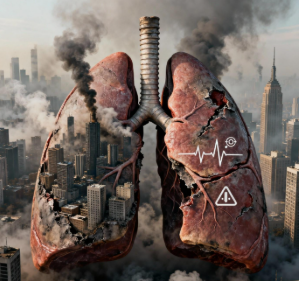
AI-generated illustration of air pollution and health impact.
The Global Health Toll
Air pollution caused over 8 million deaths in 2021, making it the second-leading risk factor worldwide. The WHO estimates 7 million deaths annually, split between outdoor (4.2M) and indoor (3.8M) pollution. Air pollution kills hundreds of times more people than natural disasters annually.
Cardiovascular Risks
Over half of pollution-related deaths are due to heart disease and stroke. Key stats:
- 32% of household pollution deaths from ischemic heart disease.
- 23% from stroke.
- 25% of global ischemic heart disease deaths from ambient air pollution.
PM2.5 exposure sharply increases cardiovascular mortality, with studies showing up to 69% rise after acute exposure.
Children and Vulnerable Populations
Children are especially at risk, with over 700,000 deaths under age five linked to air pollution in 2021. Impacts include impaired lung development, asthma exacerbation, and higher pneumonia deaths.
- 44% of pneumonia deaths in children under five due to pollution.
- Exposure slows lung growth and decreases immune resilience.
Neurological Effects
Long-term PM2.5 exposure increases risks of dementia and Alzheimer’s:
- Alzheimer’s risk rises by 94%.
- Hazard ratio: 3.26 for dementia, 4.82 for Alzheimer’s per 10 μg/m³ PM2.5.
- Air pollution accelerates toxic protein aggregation in the brain.
Regional Hotspots
India and China account for 54% of global air pollution deaths in 2021:
- China: 2.3 million deaths.
- India: 2.1 million deaths.
Economic Burden
Air pollution costs $8.1 trillion annually (~6% of global GDP) through healthcare costs, reduced productivity, and cognitive impacts.
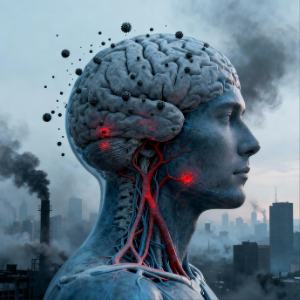
AI-generated illustration of air pollution economic burden.
Health-Focused Interventions
- Real-time pollution alerts and protective measures.
- Healthcare preparedness for pollution-related diseases.
- Air quality standards based on human health, not environment alone.
- Investment in respiratory and cardiovascular care infrastructure.
Conclusion
Air pollution is a global health emergency, causing millions of deaths, chronic diseases, and economic losses. Protecting human health requires immediate, comprehensive actions—from policy reform to healthcare readiness. The era of treating air pollution as only an environmental concern is over.