
VOCs in Your Home: Hidden Toxins and How to Reduce Them?
Volatile Organic Compounds (VOCs) are invisible indoor toxins that affect indoor air quality and pose serious health risks. Found in paints, cleaning products, furniture, and personal care items, VOCs can cause headaches, respiratory irritation, and long-term diseases. Understanding sources and reducing exposure is key to a healthy home.
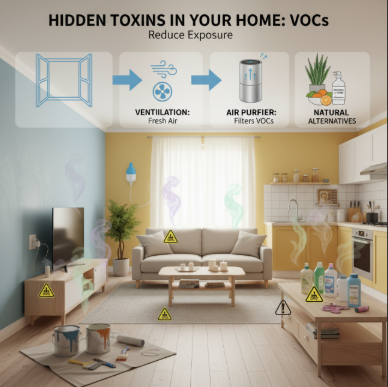
AI-generated illustration of VOC sources in homes.
Common Household Sources of VOCs ️
- Paints & Finishes: Conventional paints and varnishes emit VOCs during application and drying.
- Cleaning Products: Air fresheners, detergents, and disinfectants release VOCs.
- Furnishings & Materials: Carpets, composite wood, adhesives, and upholstery emit formaldehyde and other VOCs.
- Personal Care Products: Perfumes, hairsprays, and deodorants contribute to indoor VOC levels.
Health Risks from VOC Exposure
Low-level VOC exposure can cause headaches, dizziness, eye, nose, throat irritation, and fatigue. Long-term or high exposure may lead to respiratory diseases, liver and kidney damage, and increased cancer risk. Children, elderly, and respiratory patients are especially vulnerable.
How to Reduce VOCs in Your Home ?
- Use Low-VOC Products: Choose paints, finishes, and cleaners labeled low-VOC or VOC-free.
- Increase Ventilation: Open windows and use fans during and after painting or cleaning.
- Store Chemicals Properly: Keep paints, solvents, and cleaning products sealed and away from living spaces.
- Air Purifiers: Use activated carbon or HEPA purifiers to adsorb VOCs.
- Regular Cleaning: Dust and vacuum with HEPA filters; maintain HVAC systems.
- Limit Fragranced Products: Avoid synthetic air fresheners and scented candles.

AI-generated illustration of VOC reduction strategies.
Additional Tips
- Add indoor plants like spider plants, Boston ferns, and peace lilies to absorb VOCs.
- Choose low-emission furniture and carpets; allow new items to off-gas in ventilated areas.
- Consider indoor air quality testing in newly renovated homes to monitor VOC levels.
Conclusion
VOCs are hidden indoor toxins, but with proper knowledge and action, exposure can be minimized. Prioritize low-VOC products, ensure good ventilation, use effective air purifiers, and maintain a clean indoor environment to protect your family’s health and improve indoor air quality.